All Posts By

SanghaWebmaster

Toshoji : A monastic life for foreign monks and nuns – By Sebastian Volz

By Articles

Toshoji : A monastic life for foreign monks and nuns – By Sebastian Volz

~ By Sebastian Volz

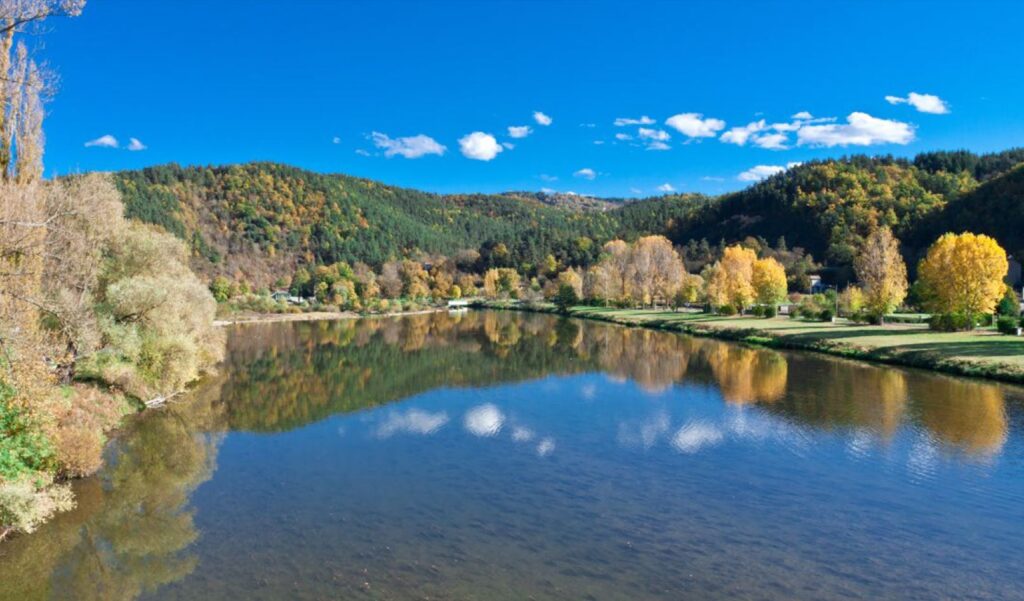
Shinto priests had seen for a long time, in the hollow of this amphitheatre of hills with luxuriant vegetation , a place protected from typhoons, a calm and propitious place for minds to meet. In 8th century Japan, the place was naturally chosen to shelter the first nippon buddhist temple, which survived the ages, belonging successively to Shingon Buddhism and since the 17th century , to the  school of Dogen and Keizan.

Its spread was immense, with its 1200 affiliated temples and the protection of the great clans of Mori and Tokugawa, despite their otherwise mutual enmity. It sheltered the great poet monk Ryokan and more recently, its abbot has been the most prolific composer of chanted Baika poems, the musical art of our School.

About fifteen years ago, the temple of Tosho -ji, fallen into disprepair, was taken up by Suzuki Roshi, with the aid of affiliated temples, to construct a Sodo, a place of training for monks. His time spent in America and Australia meant that monks and nuns came from many parts of the world and for some years now a number of French practitioners from the great sangha of Master  Deshimaru.

These days, the temple is inhabited by a mixed international and Japanese sangha, mostly of mature years, who follow an age appropriate monastic life, which also takes account of their differing nationalities. Many who were once disciples of Master Deshimaru have done their Ango there, many foreign monks and nuns, including some from our sangha spending a year or more.

So what does this monastic life consist of? -Together with a single body- mind, manifesting Shikantaza, chanting and playing the instruments.Offering our respect, eating, working, studying, washing, resting.

By the collective and regular rhythm of this operation, what Master Dogen called ‘the pure assembly’ is born and lives.

An ango at Toshoji – Sebastian Volz

By Articles

An Ango at Toshoji

Sebastian Volz’s Experience

Three months of monastic life can be summed up in a single day. Waking up to the drum, the day gets started with a long zazen, followed by a ceremony, Oryoki,  housekeeping, tea, Samu, lunch, siesta, another Samu, another tea, a rest, dinner, bath and zazen before bed.

Of course the tasks and the responsibilities vary, the seasons and the sangha change, new events and ceremonies punctuate the months. But every day, by the   rhythm and the actions performed together, our attention is held from rising to bedtime, the thoughts calmed by the fluidity of the day, where no choices need to be made. From day to day the invisible purity of our daliy life silently transforms our body and mind.

Our ‘person’ rebels, negative thoughts spring up – boredom, complaints, tiredness, criticism of others, and of the ‘system’, the body sometimes finds it hard to adapt to practice, voices are raised from time to time, conflicts can arise. But more often than not, these negativities are carried away by the continual and powerful flow of the rhythm of the days.

I arrived in the last part of the spring Ango and I stayed through the summer to complete the official period of three months. The Ango period is intense, with  the presence of 20 participants in the Ango as well as occasional visitors. At the end of the Ango, the rhythm relaxes, although the activities remain the same.

The months of July and August are hot and humid, as well as being the season of typhoons. This year, the typhoon was exceptional, the river burst its banks, and there we were with our shovels and wheel barrows, off to dig out an affiliated temple.

The month of August also holds the big event of Obon, ceremonies for the dead. Jean Marc Genzo(Kukan) and myself were able to help in the organisation and attend  many ceremonies in the temples.We also went round from house to house, in the middle of rice fields and mountains, or in the deepest valleys, to chant Daishu (Daihi Shin Dharani) and Kanromon before the  ancestral altars.

Three months – I had never spent such a time cut off from my everyday life. Once I got back, the welcome varied between curiosity and surprise at my slimmed down body, with its clear, smiling face. By repetition, these three months can finally be summed up in a single day, and that day has evaporated in the course of  continued attention.

All that remain are a few dreams, with the bright colours of reality, and life in Tokyo continues as if virtually nothing has changed.


An Ango at Toshoji – Jean-Marc Delom

By Articles

An Ango at Toshoji

Jean-Marc Delom’s Experience

The heat was suffocating when I began this Ango to live what appeared to me to be an experience. In my little room tucked away from everyone, I  reminded myself of the reasons that had brought me to this temple. A mixture of anguish, doubt, but also pride that I had managed to overcome my fear of  the unknown. I felt I was absolutely in the right place for me. I had left my family, work, habits and comfort for three months, and this had produced in those around me a mixture of incomprehension and questioning. For my part, I just followed one thing … my intuition.

I came out of the period of isolation ( Tankario) quickly and after an entry ceremony into the sodo ( the meditation room) being presented to the Roshi and the Tokudo (monks and nuns) the daily activities were soon put in place. Get up at 4 am zazen, ceremony, samu, tea and teaching, samu, ceremony, meal,  rest, samu, rest, ceremony, meal, shower, zazen and bed at 9pm. Continuous practice was established, time had no hold over us, the days were punctuated only by the sounds in the monastery. I had the impression that I had been there for months and others felt the same.

We lived together in a restricted space. We slept in the sodo, but denuded of everything, where nothing truly belonged to us, just a suitcase and the things  we needed to practise. I had an impression of just having the essentials, but everything too. A simple coffee and a bit of cake created a subtle and total inner happiness. In this space, we also met our egos, seeing ourselves in the mirror of the scrutiny of others. The intense rhythm of the days and exhaustion worsened frictions and tensions… But the continuous practice would re-establish itself and everything would become smooth, fluid and gentle.

This Ango also allowed me to create strong links with Sebastian Mokusen and to get to know him better. Our common activities, ceremonies, long  discussions, little strolls before evening zazen, were also moments of sharing and exchanging views. An Ango is a time where we can go deeply into the  functioning and construction of ‘me’ via this ‘other’ by the observation of differences, similarities and all that is deeply human : consciousness, emotions, words that create meaning and creative intelligence as the means of transformation and change.

The ceremonies of obon were not only the chance to go out and meet the local people and understand the meaning of the ceremonies, but also the chance to live in the present moment in its simplicity and authenticity. Without much rehearsal , we learnt to do them by observation and simple continued  attention.

Mistakes were unimportant, the only thing that mattered was the harmony between us. Living an Ango goes well beyond living an experience. After Sebastian Mokusen left, I experienced ‘silence’ as there was a sesshin and also because I couldn’t communicate very well in English. This meeting made me gradually realise ‘bodily’ rather than ‘mentally’, the illusion of my previous knowledge and things that I was sure of for a brief time. In this solitude and seeing the reflection of things, life appeared to be just in the present moment.

When I arrived at Toshoji, I felt I had lived there before. The day I left, I felt as if I had lived there for ever.

Three months can be summed up in an instant.

An instant of silence in that ‘peaceful abode.’

An Ango at Toshoji – Javier

By Articles

An Ango at Toshoji

Javier’s Experience

” In the field , only straw remained. Then they burnt that too …..And now, new green shoots appear here and there. This is the chance to see what rises from the ashes…”

~JMR Kôzan

From a subjective point of view, the effect of this three month ango has had a devastating effect on my sense of ‘me’, my preferences and dislikes. I felt stripped of all will to distinguish myself from  others, even in very simple and basic personal gestures. During these 85 days in the temple, everything is organised so that we forget ourselves. It doesn’t matter ‘who’ is cutting bamboo during samu, ‘who’ did meal service, ‘who’ chanted the sutras in the Hatto, or ‘who’ meditated sitting in the Sodo. There was only the evidence of being present to each moment and the key word was to be totally available.

I was merely the observer of the life that was being lived through my physical body. There was no time for more, as quite simply ‘it was what it was.’ Without a doubt, it was one of the most intense  and profound experiences of practice in my life. Everything was filled with intensity, fervour and also devotion: the ritual of ceremonies, the sutras in the morning, at midday and during the afternoon, the ceremony of repentance, every fifteen days, the daily bath….

Every occasion was a unique opportunity to bring the mind of awakening , the Bodhicitta, to life, with internal energy, whether in devotion, surrender, or the process of contiually questioning oneself…

Leaving the temple and returning home, I felt as if I ‘d been living in a dream.

Or perhaps it was the exact opposite : is my present life a dream?

An Ango at Toshoji – Pere

By Articles

An Ango at Toshoji

Pere’s Experience

Dear friends of Tenborin,

If I were to sum up the experience of my Ango in Japan, I would say that it was an intense, enriching and profound experience, but also a little difficult. I am still digesting it, 6 months after my return.

Two points have struck me, the first concerning the presence, compassionate attitude and savoir–faire of the abbot of the monastery, Docho Roshi. I think about him often, as a reference point for myself, and he has remained in my heart ever since. The second point, the rigour, the respect and the depth of the first four hours of the morning practice in the Sodo ( zazen, kinhin, genmai ) and  in the Hatto ( ceremonies.) To express this in an energetic way, I have to say “everything was perfect.”

The responsibilities both in the Sodo and the Hatto are omplex, long and rich in detail. They would often unfold during a large part of the day. It’s the continual practice of full attention. At the beginning, I found this really difficult, but I gradually became accustomed to the rythyms and forms, to the point where I felt fine with them. I must say that the moment when you feel at ease with certain rituals, that’s the moment to change them, when the time has come to do something else. Now, from a distance, I realise the point to which all this had become important for centering, rooting my practice and for using the understanding, acceptance and gratitude which flowed  from this.

Finally , I would like to express the strong experience of what it means to allow everything to fall away for three months : family, family name, friends, the stimuli of modern life, personal opinions, ordinary clothes, hair, flavours without fat, sugar, only a little salt….

There is no place for identifying with one’s ego. I felt a deep emotional fragility. I had nothing to lean on except the practice and myself. I perhaps still don’t see it very clearly, but I feel in myself a new space of patience and humility.•


Karma and Freedom – Florian Demont

By Articles

Karma et liberté

Teachings – Resources

By Florian Demont

Karma. We often take it as  synonymous with fate or  determinism. Karma, then, is a result and we are damned to experience it. We can find something along these lines (even though in a much  more sophisticated form) in Vedic culture, the Upanishads, but also in Western culture, especially in Scientific Materialism, according to which we are indeed damnedto experience the mechanical  play of cause and effect as described in our best scientific theories—and there is, according to this view, no other experience possible.

However, if we see Karma as a result, this might not be due to a particular theory we endorse. From the Buddhist point of view, there are psychological reasons for fatalism. If we feel isolated,  misunderstood and humiliated then we are held hostage by what we experience. If we see ourselves as victims of our circumstances, of our past, of our character or of other people then we really do feel damned to experience what we experience. Such fatalistic mindsets are the basis of life entangled in suffering.

Buddha’s own teachings on karma are meant to show a way out of suffering. It is meant to break the spell of fatalism. He did this by focusing on the meaning of the word karman: action. So, for Buddhists, karma is all about actions and much less about results. How does that work? First, we must understand the power of our mental, verbal and bodily actions. By judging as we do, by  saying what we say and by doing what we do, we continuously shape our reality. If we reduce our actions to repeating the same old patterns we always followed, our reality will be a boring, stupid  reproduction of what it always was—eternal recurrence of the worst sort. But if we open our minds, consider the options at hand and then attentively shape our actions, reality will be rich and  satisfying.

Indeed, it must be, because that is the law of karma. Results are still inevitable, but for calm and wise minds actions are fully malleable and that makes all the difference. So, the Buddhist take on  karma makes us realize that we are not hostages nor victims. Such fatalistic mindsets are the very core of our entanglement in suffering. It is the very core of the wrong perception Buddhists call  ignorance.

Realizing the full potential of mental, verbal and bodily actions means seeing reality as it is: interdependent malleability. There are many varieties of Buddhism, but all of them seek to correct our  perception and give us direct access to reality. All teach ethical discipline, some add love and compassion, some teach through the body, others utilize visualizations and mantras and all of them  ascribe full, direct access to reality to a serene, clear and sharp mind for which suffering is atmost a distant memory from the past.  All these methods teach us to focus on our intentions, the will  behind our actions. We learn to identify intentions behind our judgments, what we want to achieve through our speech acts and all the little wishes, drives and needs behind our bodily actions.  The more clearly we see how intention works, the more we can influence actions. This is the main point and we can clearly observe it during Zazen: intentions, wantings, drives and needs appear and call for action, but we do not move.

So, freedom in Buddhism comes down to this: you do not always have to do what you want to do. And this, once realized, gives us enough leeway to influence actions. This influence on action, in  turn, allows us to consciously shape reality. And this is how, ultimately, we will be able to abandon all suffering. Note how different this is from Western conceptions of free will. All theologians, philosophers and scientists interested in free will were very much aware of fatalistic mindsets and worldviews based on them. They felt threatened by them, because they either found such  mindsets inevitable, highly probable or just extremely widespread. But instead of shifting the focus of their investigation onto the present moment, where it becomes clear that we are not simply  victims and hostages, always damned to experience what we experience, they tried to reason their way out of the problem. They sought to fight fatalism with conceptual thinking. More particularly, they sought to find out what sort of conscious control we have over ourselves and the world. They wanted to find out whether it is possible to grasp phenomena and to give them a  different direction.

Looking at people on the streets, on public transport, at work, at home and elsewhere, while observing their eyes, the color of their skin and their posture, we must conclude that such investigations on free will did not do much good. If we are entangled in suffering, trying to grasp a bothersome phenomenon in order to give it a different, better direction, is not a viable strategy. It does not work. All we get is more frustration, more isolation, more suffering and we really end up feeling that we are victims and hostages of others, our circumstances, the world.

Buddhism all forms of Buddhism offer us a way out. Focus on what you can do. Realize that you do not always need to do what you want to do. Explore the interdependencies right in front of you. Explore their malleability. And most important of all: relax a bit and do not take everything so dead serious. Give everybody a break and turn your inner cynic to mute. After all, all this suffering is  the illusive play of distorted perception. In reality, we and the universe are basically well, things change and we all can shape


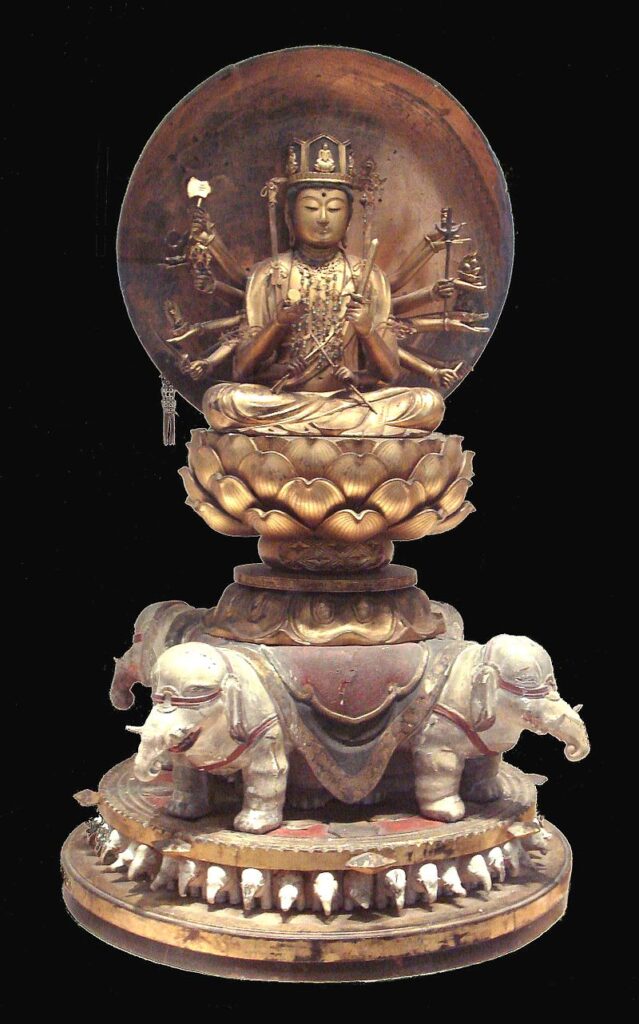
Fugen Bosatsu - Samantabhadra Bodhisattva.

The sutra and ceremony of repentance

By Articles

By Lana Hōsei Berrington

In zen we chant this verse of repentance on some occasions:

Ga shaku sho zo sho aku go
Kai yu mu shi ton jin chi
Ju shin ku i shi sho sho
Issai ga kon kai san ge

Fugen Bosatsu - Samantabhadra Bodhisattva.

Fugen Bosatsu – Samantab

This means: All my past and harmful karma ( or ancient twisted karma), born from beginningless greed, hate, and delusion, through my actions of body, speech, and  mind, I now fully avow.

It’s the verse of repentance, and it turns up from time to time in our zen way. It  comes from Samantabhadra Bodhisattva. We don’t talk much about  Samantabhadra whose name means Universal Virtue or Universal Goodness.  Whereas Manjushri Bodhisattva (Monju Bosatsu) exemplifies wisdom, and  Avelokitshevara Bodhisattva (Kannon or Kan ji zai bosatsu) exemplifies compassion  – Samantabhadra (Fugen Bosatsu) represents wisdom in action – he  says that there can be no wisdom if it doesn’t benefit beings – wisdom must be   practiced – So, Fugen bosatsu symbolises practice. I like to think of Samantabhadra  as being the bodhisattva of just being an all round good person.

Maybe the reason why we don’t hear a lot about him is because one of the features of Samantabhadra’s practice is doing “hidden good deeds”. He is mentioned in the  Lotus sutra, the Avatamsaka (flower garland) sutra, our meal sutra, and influences a lot of our ceremony. Samantabhadra is well known for his 10 vows, mentioned in  the last chapter of the Avatamsaka sutra. Vow number 4 is the vow to repent. The  words of the vow are “From beginningless time I have acted unskilfully, with craving, hatred, and ignorance, in actions of body, speech, and mind. Determined  now to begin anew, I repent.” It’s very easy to see how we get our verse of  repentance from this; the words are almost the same.

It is Repentance, our verse and our ceremony of repentance, that I want to talk  about today. The word repentance brings a lot of things up for some, maybe of  people preaching in the street, shouting “Repent Sinner !” or of a Catholic confessional with a priest to whom you confess your sins and seek forgiveness.

But  in Buddhism, we don’t have the same idea of “sin” that we find in Christianity. In Christianity, sin is an immoral act considered a transgression against divine law,  rather than a natural law.

It is also something for which you can be encouraged to feel shame, and guilt. Additionally it is a system   that relies on the benevolence of an “other power” – in this case Christ, God or a Saint, to facilitate your  redemption. In Buddhism, “other power” is called  TARIKI” – and we see other power redemption   particularly in the Pure Land school of Buddhism. The opposite of Tariki is Joriki – or ‘self power’ – this  is applicable to zen.

Another part of the idea of ‘sin’ in Christianity is the guilt and shame we can be  encouraged to feel. Guilt and shame are about keeping us stuck in the past. Keeping  us, in our minds, inside some past story that we have created; a story that is all  about how horrible we are. “I’m so terrible, my god, I’m the worst person, I will beat  myself” – It’s a very self-centred attitude, it turns a situation into something  that’s “ALL ABOUT ME!”. Guilt and shame are about NOT Continuing, not letting go, being unable to return to the present.

In Buddhism, repentance is not about  shame or guilt. It is about acknowledging the role that we play in this world, and  seeing it clearly. We can express our regret – which is a way of addressing the  suffering we have caused, we can apologise, if it’s appropriate, we can accept  responsibility, and then we can move forward. We WANT to recognise and acknowledge what we have done, so we can return to the present and meet what is  right here, right now. Recognise is a great word. I looked up the English word  recognise, and found out that it is taken from the Old French world recognoistre – which means to RE THINK – to recall to mind – to know again.

So, there is an element of wisdom in recognising our misdeeds.

Whatever the  consequences of our actions – whether wholesome or unwholesome  – whether good or bad – in Buddhism, we own them. They are ours – and one of  our jobs is to recognise that. This is the English word “avow”. “I now fully avow”  means to acknowledge, to look again with eyes open. To think again, and then  MOVE FORWARD from this place – that is to say – to let go and return to the   present.

When we perform repentance rituals, or chant the repentance verse, the point is not  to ask forgiveness from someone for what we’ve done. It is not “Bless me father  for I have sinned”, which is ‘other power’. It’s important that we don’t think in this  way, ultimately there is no gap between ourselves, the person who we might be  asking forgiveness from / or whom we may have harmed, and the actions we have committed.

Finally, when we move forward, there is also an element of repentance that  encourages us to try not to create harmful consequences again. Repentance doesn’t  mean we should keep causing harm. Just because you can mend a broken leg,  doesn’t mean you should break your legs.

Guy often speaks about giving and receiving – that the giver, receiver and gift are not separate – are one. This is the same. The one who acts, the  consequences and the aggrieved party, are not separate – they are one. Real repentance can’t rest in “wrong view”,  in thinking we are separate. In  Buddhism, the purpose of “right view”  is to clear one’s path from confusion, misunderstanding, and deluded  thinking. It is a means to gain right  understanding of reality.

So, we do 2 kinds of repentance in Zen. Formal and Formless.

Formal repentance is when we own up to something, usually something specific –  like when we apologise for hurting someone. Our verse of repentance is formal,  except that it’s non-specific.

We chant the repentance verse before ordination ceremonies (tomorrow), before we receive the precepts (also tomorrow), and the beginning of our Ryaku Fusatsu  ceremony (our repentance, or purification, ceremony) – where our commitment to the precepts are re-affirmed. “Ryaku” means, “abbreviated” or “simple”, and “fusatsu” means “to continue good practice”,  or, “to stop unwholesome action”. Our ceremony (that we’ll do later) is even more abbreviated than the ones commonly  done – a very abbreviated resolve to continue good practice, or to uphold  Samantabhadra’s wise practice.

This ceremony is similar  to a ceremony done in the Theravada and some other kinds of Buddhism, where traditionally, the monks and/or nuns in the sangha meet  twice a month (on the full and new moon) and confess openly all their specific  transgressions of the 227 (311 for women) Prātimoka rules of the vinaya which they  broke over the past fortnight. Each rule broken exacts a prescribed penalty, a  specific punishment from the community. This punishment could be anything from  simply apologising, to being kicked out. But, don’t worry, we don’t do that, we don’t  normally confess or repent specific actions in front of the community, or even to a  third party, nor do we have any prescribed penalties. Our repentance is much more  broad and all encompassing. It is non-specific, we own up to ALL of our harmful  actions of body speech and mind from the beginning of time. Acknowledging our regret for harmful actions is done internally, with the awakened quality of our own  mind.

The idea is that we chant this verse before we take on something very important –  it’s like moving forward with a clean slate, like washing cloth before we dye it.

That’s  Formal repentance. The other kind of repentance that we do in Zen is  “Formless Repentance”. Formless repentance, is repentance in the ultimate realm.  It is absolute/supreme, it is beyond any idea of good or bad, of wholesome or  unwholesome, of helping or harming. It is letting go completely. Zazen is formless  repentance exactly.

Daikan Eno (Huineng) – the 6th  Chinese ancestor talked a lot about  formless repentance in the Platform Sutra. He stated that formless  repentance will annihilate the sins of  past, present, and future, enabling you  to attain purity of thought, word, and deed. Formless repentance happens in each instant.

Master Eno wrote:

From the preceding moment of thought, the present moment of thought, and the  following moment of thought, from moment of thought to moment of thought I will  not be affected by folly or delusion / conceit or deceit, Jealousy or envy; I repent of  all previous folly or delusion, conceit or deceit, Jealousy or envy and other faults  due to them, may they disappear all at once and never occur again.

Formless repentance is manifesting your true self, in this moment.

In the reality of our lives, where we live, in this relative world, we have to make  choices every day. We use our discriminating mind all the time, it’s unavoidable. We have to decide what is good, what is bad – but in zazen – we just let thought pass –  no discrimination, no judgement, only pure presence, we are totally free from  discrimination. Repentance is letting go of our past, and zazen is letting go completely. So our practice of zazen is also the purest, most complete, form of  repentance.

We need both kinds of repentance in order to move forward in each  instance.  Formal repentance cleans the slate, and softens the consequences of our  self- centred actions of body, speech, and thought. Formless repentance deals with  the roots of these actions. Formal repentance prepares us for zazen. Formless  repentance is zazen itself.

In the Sutra of Forty-two Sections: The Buddha said:

If a person has many offenses and does not repent of them, but cuts off all thought  of repentance, the offenses will engulf him, just as water returning to the sea will gradually become deeper and wider.

So… it’s good to repent – it’s good to recognise our misdeeds, it’s good to let them  go, and to try to do better in the future. In Zen, whether we are working with the  precepts, sitting in zazen, or engaging in daily activity, what is emphasized is  returning – returning to our original nature before any thoughts of separation.

Dogen Zenji wrote:

We should reflect on it. This is the exact point of a realized buddha. With  repentance you will certainly receive invisible help from buddha ancestors. Repent to the buddhas with mind and body. The power of repentance melts the roots of unwholesomeness. This is the single colour of true practice, the true heart of trust,  the true body of trust “.

In the Samantabhadra sutra it says:

The ocean of all karmic hindrances arises solely from delusive thoughts. If you wish to make repentance, sit in upright posture and be mindful of the true reality.  All misdemeanours, like frost and dew, are melted away in the sun of wisdom.


Resting in the unborn

By Articles, News

Resting in the unborn –
New Kusen collection of Guy Mokuhō Mercier

(available in french only)

By Liliann Shu Rei Manning

RESTING IN THE UNBORN is the 3rd collection of Guy Mokuhō Mercier’s kusen. This booklet  consists of five groups of kusen, delivered on  various occasions, and a teisho on samsara, the  wheel of life. The subject of this teisho has  interested Guy Mokuhō for a long time and his  enthusiasm is infectious!

As with the two previous collections, this 3rd booklet offers us a unique meeting  between the subjects traditionally taught in zen and the particular way in which the  author approaches them. To read Guy Mokuhō’s kusen is to enliven and invigorate  our practice! Thanks to his teachings, we become particularly aware of the need to  be conscious of our sensations. The booklet has about sixty paragraphs, in which  Guy Mokuhō refers to sensations. Here are two examples, which illustrate this perfectly. They appear in the first pages of the booklet 3.

Bringing your awareness to your sensations, following them as they spread out,  and then disappear, is an instruction which allows us to come back into the flow of  life, from moment to moment. The present moment is as it is, neither good nor  bad.

And a little further on:

“The more we become One with sensation, the more we feel life, which  flows in heat, energy,, tension, waves, and the more our field of  consciousness widens until it simply disappears in the sensation of  being, which is not bodily. It isn’t an exercise which we can do just by  personal will. We must let ourselves be. The sensation of being -or to  take up the Buddha’s expression: pure consciousness of the presence of self.”

The more we become One with sensation, the more we feel life, which flows in heat,  energy,, tension, waves, and the more our field of consciousness widens until it  simply disappears in the sensation of being, which is not bodily. It isn’t an exercise which we can do just by personal will. We must let ourselves be. The sensation of  being -or to take up the Buddha’s expression: pure consciousness of the presence of self What is more, coming back to the first quote, reading his kusen allows us to  acknowledge that the present moment can only be pure: nothing is added, and it  can only be felt, so, it cannot be willed.

If I could sum up in one sentence what I felt after reading this collection of kusen, I  would say that knowing that these teachings are available whenever I want to read  them again means that I can ensure a constant source of spiritual nourishment. •


A Kusen by Guy Mokuhô Mercier

By Teachings / Resources

In zazen as in kinhin, we practise relaxation of our entire body. But relaxation is sometimes difficult because we don’t know what to do with our legs, our knees, and also with our pain.

Relaxing in our verticality, is in a way opening up, and being able to see what prevents us from this opening up or what opposes to it in our body.

Opening up to “that which comes to us”, to what appears in us, in our own mind, in our own body. That which comes to us is life, and this can only be perceived in the present moment, in what we feel or see. Then we turn our gaze inwards, and that is in fact an act of consciousness. We can involve our conscious gaze on what is happening in ourselves, now.

Our gaze internalizes itself, consciousness returns to what is alive, and ceases to lose itself in thoughts.

Without the perception of sensations we could not have the consciousness of our body. So it is through sensations that we become aware of the space of the body.

It is not limited by the surface of the skin and when we study our sensations, for instance that of the hands during zazen, we realize it is difficult to feel an inside and an outside. Our hands are a space of consciousness, the sensation itself melts with the consciousness that looks at it. Non-duality.

Buddha would recommend to “perceive the sensation within the sensation”. That means to enter a sensation that we have chosen completely, to study it, to look at it, to get into it. The sensation within the sensation becomes pure sensation of being, sensation of one’s presence which is not really physical, sensation of a space which has no limits really.

And this sensation you have chosen you can widen to your entire body and realize that consciousness is everywhere at the same time. You cannot find a top or a bottom in it, nor a beginning and an end. When we are in this consciousness, we have the knowledge of silence, even if there is noise around.

This presence, this consciousness of the Presence is our intimacy really, it is the space in which our life, our body, our thoughts are perceived, where they appear, where they extend and where they disappear.

Consciousness has no form, but it watches forms.

It is not a sensation, but it is aware of sensations.

Consciousness is not a thought, but it watches thoughts and  when it gets involved in them, in a way it becomes absent to itself.

That is why you must keep a distance from your thoughts and just watch them pass along.

Buddha would use the comparison with a mirror : consciousness, as pure perception, when there is no ego to take it over, can be compared to a clear mirror, where forms, sensations, thoughts and all the world of phenomena appear as reflections. Our meditation consists in being the mirror that remains empty, although reflecting all appearances, all forms. We come back to this mirror which does not seek appropriation, which does not try to seize or reject things, which is peaceful, luminous, which sees all without taking sides, which never interferes.

Buddha says : “when we realize that our own body, its possessions, its sensations, its perceptions and the space occupied by this body are nothing but the field of experiment of consciousness, when we realize this, we no longer need to take over for anything ; there is no more object for appropriation.”

The just vision consists in sticking constantly to this realization, without ever giving it up.

Kusen de Guy Mokuhô

UJI or the Breath of Existence – Shobogenzo Chapter 11.

By Articles

U means existence, Ji means time.

“Generally the term uji refers to a moment where someone finds themselves in possession of something that is circulating between people, money for example. In the phrase “ I ‘ll pay when I (will) have money,” “when” is the chinese character ji and “will have” is u. Sometimes uji denotes a limited lapse  of time, being part of a moment which is continuing without interruption. This meaning of uji is often used in Buddhist writings and zen texts. It means not only a moment as a point in time, but sometimes also a short period of time during which something continues whilst keeping the same state.”

Reverend Seijun Ishii, University of Komazawa.

Uji is a high point of the Shobogenzo, which touches directly on the essential points of time and existence. The approach is very pragmatic, yet at the same time very disconcerting, as it tricks our intuitive perceptions. But finally, Master Dogen brings action to the fore as the key to the revelation of existence – time.

I will translate a paragraph here that explains the essence of Uji and the point of view of the enlightened one on the subject.

Uji – paragraph 7.

“ We should not merely understand that time flows.
We should not learn that the flowing of time is its sole aspect. If we let time flow and get away from us, we are then completely separated from time. Those who fail to experience and hear the truth of existence – time merely understand that ‘time passes.’

Seize the essential : all things are at the same time linked, one to another, in a flow, yet at the same time distinct ‘moments.’

And because all moments are the appearance of existence-time, these moments are our existence-time, our true life.”

Our experience of time is in the first place one of stories and events passing by. The cycle of days, months, seasons and years. Those of our nearest and dearest and others. Children are born and grow up. Adults get old and disappear.

Our experience show us the flow of time and to us  this quality seems evident to all. This quality is , in effect, an authentic aspect of time recognised by the awakened. But the difference between us and the awakened one , is that we extrapolate.

We imagine time as contiunuing to flow out of our reach, outside our perceptions, forming and consolidating a future and a past. Our thinking mind constructs these ‘extensions’ of time and uses our memories to give them credibility. To the point where we believe that past and future actually exist. That is the major source of our suffering.

Time for the awakened one unfolds beneath his feet like a treadmill at the gym. Time only exists to the extent that he experiences it , not beyond. For that reason, he is never expecting anything and fear has no hold over him.

This is how Dogen explains that time can only be revealed by means of the living expression of reality. We cannot conceive of time without conceiving movement. And existence, conversely, can only appear through time. How can we actually  experience something which only appears in the moment?

Time and existence each  reveal themselves in this way to form Uji , existence – time.

This revelation can only happen in the present moment, in the contact between time on the one hand, and what appears on the other.

In this way each being carries with him his own time in which his existence shines forth. And we cannot actually escape Uji. Where would our life be if it was outside what is appearing right now?

Uji is the present moment of each sentient being, the point of the incandescence of life.

To realise existence-time is to realise that time is composed of a succession of “moments.” For time and existence are intimately connected and as all existence is born and dies, time also is born and dies to form “moments.”

What is the duration of a moment? A moment lasts for a lifetime, a season, a moon, a day, a breath. It lasts for the time that flows between birth and the death of an expression of life.

We don’t see these moments of life because  our illusory “extensions” of time absorb our consciousness in what has been dead for a long time, what is composed of our  memories.

To practise Uji is to be conscious of what makes an existence into a moment, that is to say to be conscious of our birth and death.

The great practice of Uji is Hishiryo, the art of zazen, which consists of lifting oneself to heights where all thoughts and experiences can be seen as they arise, live and disappear.

We can practise Uji by being aware of the beginning and end of these vital moments , which are close to us, like our breath. It is enough to bring our attention to the space that arises between exhalation and inhalation.

In our present life, on concentrating on the space between two actions – for example between two mouthfuls, two sentences, two thoughts, we cause the “moment” to be born and die. Doing this we give it life and we shine out with all our existence – time.

A Small Poem about Uji

The pebble falls in rippled water
Water is a mirror
The sun rises on the sleeping earth
The stars are pointing

Close the door when we get home,
Greet the arrival, greet also the departure,
Close the door when we go out,
And so leave no trace
In the space

Sebastian Mokusen Volz, 23 Avril 2018, Tokyo